Trope Tuesday: Grudging Thank You

For those of us in the US, it’s a short week! But that doesn’t mean we’re going to skip over another installment of Trope Tuesday, our weekly sojourn into TV Tropes and a distraction from the workplace. Up this week is a trope called the Grudging Thank You:

Though it sounds understated, it can mark the beginning of a change in a character or relationship.

Alice has always disliked Bob or people in general or is just very proud. But to Alice’s dismay, she gets helped out by Bob in a moment when she really needs it. Glumly, Alice accepts and just when Bob is leaving Alice goes:

“Oh, and Bob…” Then a pause to indicate Alice biting the bullet. “Thank you.”

This thanks, however grudging, is sincere; insincere ones fall under Embarrassing Rescue. It can often be a Crowning Moment of Heartwarming.

Compare Think Nothing of it and Does Not Know How To Say Thanks. If Bob has the same attitude as Alice, he is prone to express it, either because he dislikes the connection it formed, or because he did not act for Alice personally.

Contrast Ungrateful Bastard.

Where have we seen this in the Expanded Universe? Well, let’s go back to Heir to the Empire, the first book of the Thrawn Trilogy. Remember back on Mrkyr?

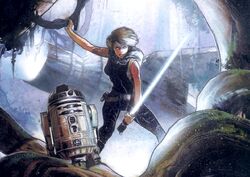
Mara Jade takes Luke Skywalker prisoner while walking through Myrkr and then has to protect him from the Force-hunting predators native to the planet. She hates him and is also Force-sensitive and reads as prey to the vornskrs, so she tries taking stims to go without sleep. When a vornskr does finally get past her defenses and goes for her, Luke takes back his lightsaber and saves her with considerable difficulty. She has him drop the lightsaber and back off before very grudgingly thanking him and saying that now they’re even for when she did not kill him immediately after finding him. But she still hates him.

You won’t be singing that tune forever, Mara.

Howard Roffman Returns to Lucasfilm

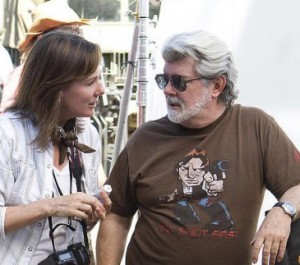
Over at the Official Blog, Howard Roffman discusses his return to Lucasfilm as well as his history with Bob Iger of Disney and Kathleen Kennedy. It’s a fascinating read, delving into history with Disney as well as why he chose to come back to Star Wars.

I would not have come back unless I truly believed that we were doing the right thing for Star Wars and, even more fundamentally, that we were entrusting its fate to people worthy of that trust. I believe in Bob and his teams at Disney. I believe in Kathleen. And I believe in George and our company. My faith isn’t blind. It’s based on knowing these people for decades, knowing their talents, their achievements, their integrity, their commitment. For many of the pundits analyzing the Disney deal, we are often little more than abstractions based on resumes and numbers on a page. But for me it’s much more. My faith is the product of my life experience, what I know from living and working with the folks to whom the torch has been passed, who will now share responsibility for keeping the Star Wars flame burning bright.

To read the rest, head over to the Official Blog.

EU Retrospective: The Really Old Republic

It’s taken slightly longer than anticipated thanks to some difficulties with the library but I’ve finally finished the first leg of my Expanded Universe reread.  The short version?  There were certainly some ups and downs and WOW am I glad to be getting out of these eras and away from these old school Sith.  (Sith Fatigue is a real and dangerous disease, folks.  It claims hundreds of readers every year.)

The Old Republic: Revan:

I’ll freely admit to being a HUGE KOTOR fangirl back in the day.  Somewhere, buried on a harddrive, is probably a lot of half-written fanfic about the characters.  I was obsessed with Revan and had slightly ridiculous crushes on both Carth Onasi and Atton Rand.  (That was totally my right as a 14 year old girl.)  If you’ve never played either of the Knights of the Old Republic games, the one thing you should know is that your character (Revan in the first game and the Exile in the second) is essentially a blank slate.  You decide their gender, their looks, and their personality.  Therefore, I spent most of the first half of the book trying to reconcile the Revan in my head (a very snarky lady) with the canon Revan who is decidedly not her and is, in fact, a man.  (Curse you, canon!)  Also, I insist that Natalya Donn is totally a better name for the Exile than Meetra Surik.  I mean…. Meetra?  Really?

As a whole, the book left me feeling mostly underwhelmed.  The basic premise?  Great.  I’ve always been intrigued about what made Revan originally turn to the dark side and where he disappeared to in the time between games.  I wasn’t as thrilled with the execution.  For starters, the book falls just short of 300 pages; something that makes me glad I didn’t purchase this book as a hardcover.  I also felt that the many of the action sequences fell victim to video game syndrome where paragraphs often felt like they were queues of action commands.  Additionally, I found myself missing the presence of characters like HK-47 and Jolee although I can understand why they were left out of the book.

My biggest issue was with the pacing.  Obviously Karpyshyn was aiming to answer some of the questions players had about the gap between games which, as one of those players, I appreciated.  However, the ending felt rushed, weirdly open ended and I still don’t really know what happened.  (I’m also a bit miffed about the Exile’s unceremonious exit but that’s another rant entirely.)  Two-thirds of the book occurs in the gap between games and the last third post-KOTOR2.  It certainly could have benefited from a more even split and more pages.  Actually, upon further reflection, I’m comfortable with saying that I hated the ending.

This all isn’t to say that the book is horrible but it won’t be making my ‘Essential EU Reads’ list any time soon.  It’s certainly worth the read if you were a KOTOR player and if your Revan was male, you’ll probably have a much easier time getting into the book than I did.  I did enjoy the parts with Canderous (even wished there had been more of them) and I especially appreciated the nods to the Mando language.

At the end of the day, it’s not a replacement for KOTOR3 (honestly, nothing really could be) but at the very least, it’ll help fill the KOTOR shaped void in your life for a little bit.

Continue reading

Brad Bird Not in Episode VII Running

When Michael Arndt signed on for Episode VII, speculation immediately shifted towards Lucasfilm bringing Brad Bird on as the film’s director. It would have made a lot of sense. Bird has been in Disney’s good graces for a while, helming films such as The Incredibles and Ratatouille. Unfortunately for those hoping for Bird, E!Online reports that he won’t be handling the film.

Spielberg’s out, Abrams is out, and now Bird is out. I’m starting to think the director will be someone that most of us don’t recognize.

Tosche Station Radio #36: Authenticity

Logo

Play in new window | Download
The hosts are back and there’s more Episode VII news to discuss in this week’s Tosche Station Radio!

Kicking off the show, Nanci highlights what’s new on the blog. Brian wrote a pair of columns looking into the Big Frakking Sale with a look at what it could mean for the Expanded Universe and the future of Star Wars in general. Bria reviewed the first Captain Marvel arc. Nanci re-read the Jedi Prince books. Meanwhile, Bria’s re-reading her collection of Expanded Universe novels. Emily reviewed Billy Dee Williams’ appearance on NCIS. Nanci introduced a new feature called Bake It So and the first recipe featured was “Come to the dark side, we have chocolate cake.” Bria reviewed The Old Republic: Annihilation by Drew Karpyshyn. The hosts talked about Cosplay Appreciation Day and the awful double-standards applied to female fans.

In Fixer’s Flash, Nanci’s been keeping herself busy by going on cross-country trips and writing a novel for Nanowrimo. She also appeared on the Wrong Opinions About Movies podcast to discuss the big Lucasfilm sale. Nanci’s week was made when she was officially accepted into the Rebel Legion! Meanwhile, Brian has been reading a book and not making appearances on other people’s podcasts.

Deak’s Dirt and Camie’s Concerns are combined this week as the hosts tackle more Star Wars news and discussion. We now know who the screenwriter for Episode VII will be. What does all of this mean for the Expanded Universe? Will the Big Three return? Just what is Lucasfilm up to?

Wrapping up the show, the hosts answer questions in their Ask Us Anything segment.

Tosche Station Radio is the official podcast of Tosche-Station.net and a part of the Solo Sound network. If you like what you hear, please leave a review on the iTunes Music Store or the Zune Marketplace. We can also be found on FacebookGoogle+, and Twitter.

Nanci and Brian are the co-founders and writers of Tosche-Station.net. You can find Nanci on Twitter with the handle @Nancipants and you can find Brian with @LaneWinree.

Report: Kennedy Says Lucasfilm Ramping Up for 2-3 Films Per Year?

“2-3 Films per year? Seems aggressive.”

Dunc over at Club Jade spotted an interesting (and surprising) quote in the Star Wars edition issue of Entertainment Weekly. According to them, Lucasfilm head Kathleen Kennedy wants to make 2-3 films a year?

Lucasfilm’s co-chairman and soon-to-be president, Kathleen Kennedy, has told employees she wants the company to produce two or three films a year (it’s averaged fewer than four per decade), and first up is Star Wars: Episode VII for 2015, which will pick up sometime after Darth Vader gave his life to overthrow (figuratively and literally) the Emperor and save Luke in 1983’s Episode VI— Return of the Jedi. Yes, the plan is to return to the characters in the first trilogy (1977–83). Whether the original actors will have significant roles or merely be on hand to pass the baton to a new generation of actors—something Lucasfilm tried with mixed success with Indiana Jones and the Kingdom of the Crystal Skull and Disney with TRON: Legacy—is unclear.

Now, let’s be clear. Based on this quote, it doesn’t mean that this would equate to 2-3 Star Wars films per year. It could be 2-3 films with any existing or potentially new Lucasfilm intellectual property. I’d hope it’s the latter, because 2-3 Star Wars films per year screams market over-saturation to me.

If it’s 2-3 Lucasfilm projects that aren’t necessarily Star Wars, that actually makes a lot of sense. With the capital resources Disney can now provide, the studio can probably afford to expand the scope of their work dramatically.

Or option the third, Entertainment Weekly misquoted Kennedy or misunderstood what she was talking about. I expect multiple news outlets are reaching out to Lucasfilm and Disney for clarification right now.

Trope Tuesday: Epileptic Trees

It’s been a busy few weeks (Episode VII? What!?) and I’ve let this feature fall by the wayside. But it’s back! Trope Tuesday is our regular feature that dives into Tropes, literary themes, devices, and elements that make our favorite pieces of entertainment chug along. This week, we’re looking at one called Epileptic Trees.

A term for wild, off-the-wall theories. Named after a leading tinfoil-hat theory explaining the mysterious shaking, rustling trees on Lost during the first season of that program. The theory? The trees are having epileptic fits. Can be traced back to H. P. Lovecraft‘s story “The Colour out of Space”.

Not only common, but expected for Mind Screw series. A major species of Tree is Everyone Is Jesus in Purgatory. An ongoing series which uses Chekhovs Guns to the point of becoming a Chekhov’s Armoury encourages Trees because all newly introduced objects/people/skills/etc will be suspected of being a Chekhov’s Gun. Horrible epileptic trees are known as Poison Oak Epileptic Trees.

See Stock Epileptic Trees for other common examples.

Epileptic Trees suggested by characters are a sign of Scully Syndrome. When an Epileptic Tree is rendered null and void by the official Canon, it’s said to be Jossed. When an Epileptic Tree becomesCanon, you’re allowed to say, “I Knew It!” – unless it became Canon because it was an Epileptic Tree, in which case it’s Ascended Fanon. See also Inferred SurvivalUrban Legend of Zelda and Schrödinger’s Butterfly.

Boy howdy, is the Star Wars fandom getting swamped in this lately. There’s all sorts of conjecture and theories as to what Episode VII might be. We’ve got everything from the Expanded Universe being overwritten (because George Lucas hates Mara Jade*) to Darth Vader’s coming back from the dead (because why not). Fans are busy trying to find any sort of clue or hint from the films, books, and television that they might be able to use to divine the future of the franchise.

Brace yourselves. It’s going to be a long three years.

*No proof of this claim

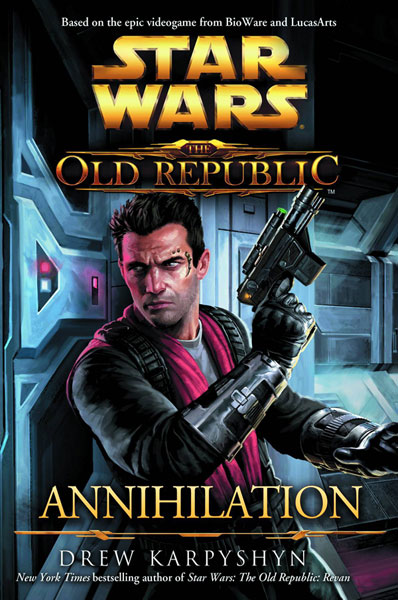
Review: The Old Republic: Annihilation

As someone who hasn’t really kept up with the Old Republic novels or gotten around to playing the new game, I went into Annihilation not expecting anything more than a decent read where I’d have to continuously look up references to events I had no knowledge of.  What I actually got was an incredibly fun read where I only occasionally had to reference Pablo Hidalgo’s Essential Reader’s Companion for dates and general information.  Color me very pleasantly surprised.

Drew Karpyshyn’s latest novel, The Old Republic: Annihilation, centers around Theron Shan, a field agent for the Republic’s Strategic Information Services. He’s also secretly the son of Jedi Grand Master Satele Shan but has no connection to the Force.  (Spoiler Alert: This will definitely be a plot point later.)  The Sith Empire has at its command a technologically impressive and incredibly dangerous warship called the Ascendant Spear.  Under the symbiotic control of Darth Karrid, it is a ship that the Republic has to destroy if they want to ultimately beat the Sith Empire.  Cue Operation End Game: It’s up to Theron Shan and Jedi Master Gnost-Dural to find a way to stop Darth Kerrid and the Ascendant Spear.

The plot itself is entertaining and never really drags. The book is one part spy, one part action, and often left me fondly reminded of the X-Wing novels.   It opens with an unauthorized mission that helps establish not only the tone of the novel but also who Theron is both as a person and as an agent.  The book continues to move the overarching plot forward with just the right amount of missions/ action sequences to keep things interesting but not enough so that it feels overly excessive.  The threat of the Ascendant Spear also works well because it presents enough of a danger to warrant Operation End Game but doesn’t fall victim to Ridiculous Super Weapon Syndrome.

One of the book’s highlights was the brief chapter that focuses purely on the poor Imperial Minister of Logistics.  No one really appreciates the work he does and obviously the Empire wouldn’t function nearly as smoothly without him.  Efficiency is everything and the politics of the Sith Lords are a nuisance even if he does know how to play that game.  It’s amusing and a nice (yet relevant) break from the main storyline.

The characters are what really help the novel succeed.  Theron himself is an interesting protagonist who occasionally gives off a strong Corran Horn vibe because of his huge amount of self-confidence.  He’s self assured and a bit cocky at times but it never truly spills over to arrogance.  He also doesn’t fall into the expected trap one would expect of the Force blind offspring of the Jedi and never really broods on it.  Does Theron have some unresolved issues in regards to his mother?  Sure, but they never become a defining character trait and only really surface when prompted by circumstances.  Another entertaining character was Marcus Trant, the Director of SIS, who you just can’t help but sympathize with when he has to deal with Theron’s antics in the field.  He’s good at his job, struggles a bit with his personal life, and just positively had it up to here with Theron some days but can’t fire such a valuable agent.  Gnost-Dural, the token Jedi of the book, was another pleasant surprise who left me intrigued about his life from before the book’s start.  I also found myself soon warming to Teff’ith, the young smuggler who has a very weird bond with Theron.  She’s incredibly independent and doesn’t want Theron poking into her business.  Her speech patterns thankfully manage to walk on the right side of endearing or irritating and she ultimately has one of the best lines in the book.

The only thing that I wasn’t really a fan of was the family plot line.  Theron learns who his father is about a third of the way through the book and it is not exactly the shocker of the century.  As a whole, the plot line actually works with the book but the obligatory awkward family scenes left me rolling my eyes because they felt too expected at times.  However, they didn’t detract drastically from my enjoyment of the book.

Overall, I give Annihilation a 3.5/5 and say that it is definitely worth the read especially if you are interested in the era or are looking for a fun Expanded Universe book that’s not part of a giant series.


Thank you to Random House for providing us with an advanced copy of the book for review purposes.