Live Action ‘Star Wars’ Series Still In The Works

You can be forgiven if you’ve written off the live-action Star Wars television series.

Rick McCallum says that the project is still on the table and scripts have been written. The issue remains the cost of production. There’s an incredible amount of visual effects they want to work in, more than any of the films they’ve done in the past. Sadly, I think that this series just isn’t going to happen unless Lucasfilm is willing to scale back on the effects. Fans aren’t looking for a visual masterpiece in a television series, they’re looking for regular  installments of story and characters. You don’t have to squeeze blockbuster-grade visuals into a 45 minute television episode.

Perhaps the showrunners should call up Ron Moore for a consultation.

Via Club Jade

Ian McDiarmid Confirmed for Celebration VI

News just dropped that Palpatine himself will be attending the Star Wars convention to end all Star Wars conventions. From the official site:

Ian McDiarmid, the actor who unforgettably played the evil galactic mastermind and the ultimate villain of the Star Wars saga, will be making a rare convention appearance atStar Wars Celebration VI, appearing on-stage and signing autographs.

In 1983, McDiarmid embodied the full depth of the dark side as the Emperor in Star Wars: Episode VI Return of the Jedi, his face hidden under ghastly makeup and his eyes concealed behind sickly yellow contact lenses. When his true face was revealed as the apparently kind and helpful Senator Palpatine in Star Wars: Episode I The Phantom Menace (1999), he projected a different kind of evil — a subtle manipulator of galactic events, a villain hidden in plain sight. As the prequels progressed, so too did Palpatine’s plans until finally, in Revenge of the Sith (2005), McDiarmid got to play evil at its fullest, and revealed the true power of Darth Sidious.

This will be McDiarmid’s first time at a US Star Wars Celebration (he made a brief appearance at the opening ceremonies of Celebration Europe), and his first time ever signing at the Celebration Autograph Hall.

McDiarmid will be joining the likes of Peter Mayhew and Carrie Fisher at Celebration VI this August.

Tosche Station Radio #16: Genre Subversion

Logo

Play in new window | Download

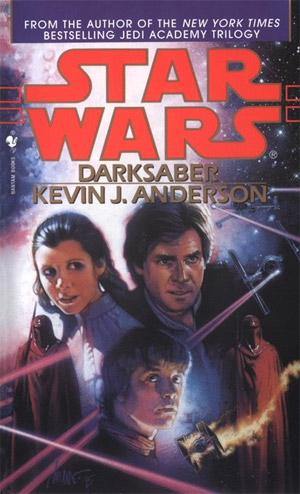
The hosts kick off by highlighting what’s new on the blog since our last audio check-in. Emily wrote a column looking into why Star Wars needs women more than ever. Nanci discussed why we love Star Wars, and as hard as it is to believe, it’s more than just the lightsabers and explosions. Shane started up his retro review of Kevin J. Anderson’s Daarksaber. We asked you for your Star Wars Avengers. Finally, Brian checked in with his latest column that  investigates how The Legend of Korra is taking down gender stereotypes and the lessons Star Wars can draw from it.

Over in Fixer’s Flash, both Nanci and Brian have seen the Avengers (Brian several times now). Both the hosts now want some shawarma as a result. Nani has been reading through the Mageworld series, and from the sounds of it, she recommends it highly. She also has been working on her original novel and is posting excerpts over at her blog. Brian has finally gotten around to reading Luke Skywalker and the Shadows of Mindor. Of course, he’s still reading Marvel comics and trying to catch up with his friends, but he took some time out to see Dark Shadows. It’s exactly what you should expect from a Tim Burton movie that’s remaking a 70s soap opera about a vampire.

Continue reading

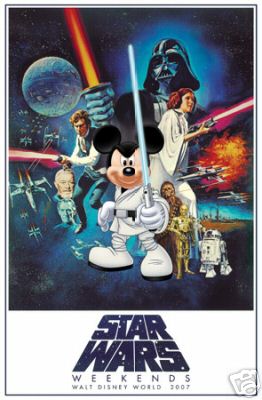
First Star Wars Weekend Schedule Hits

For those of you fortunate to be in the Orlando area for Star Wars Weekends at Disneyland’s Hollywood Studios, you’ll be happy to know that schedule for the first weekend has been posted.

For those of us who aren’t lucky enough to be in the Orlando area, we’ll be able to keep tabs on what’s going on thanks to Nanci. Who is fortunate enough to attend.

I’m not jealous. Really. I’m not.

Attack of the Clones Turns 10

On this day ten years ago, Attack of the Clones released released to theaters. Given that I was twelve and at the mercy of my parents disdain for going to the cinema, I didn’t get to see it until about two weeks later when a friend offered to take me. In our house, I usually didn’t get to see something until it released on VHS or DVD.
My memories from the first time I saw it are somewhat vague. Something something Fetts something something look at all those lightsabers something something HOLY CRAP YODA HOLY CRAP DEATH STAR SCHEMATICS.

Star Wars Needs To Learn From Korra

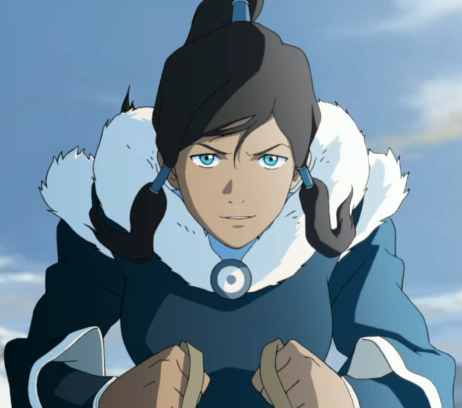
Meet Korra. She’s awesome.

I honestly hadn’t planned to chime in on this.

By now I imagine most of you are aware of the Great Gender Kerfluffle of 2012 that cropped up in the Star Wars fandom over the last few weeks with much being said about the need for more well-developed female characters in this franchise. Emily chimed in last week and eloquently put things into perspective. Frankly, people far more knowledgeable and better with wordy-like-thingamawhatsits than I am said what needed to be said. Still, as I was reading through things on the sidelines, I ran into one comment in the Club Jade post that got my gears turning. I can’t even remember what exactly it was or who posted it, but it set off a bit of something in my head that needed to be addressed. Well. Three things, specifically. A trio of arguments that I’ve seen recycled numerous times during the recent dustup and over the years.

While I was turning these arguments over in my head, another thought hit me. There’s a television show, a current one, that has addressed these points that were troubling me. Then it all clicked.

Star Wars has a lot to learn from The Legend of Korra.

Continue reading

Trope Tuesday: Retcon

Welcome to another edition of Trope Tuesday, where we hit up the black hole of productivity and investigate a literary theme or device that helps our favorite entertainment chug along. This week, we’re hitting on one that many Expanded Universe fans are intimately familiar with: Retroactive Continuities, or Retcons.

Reframing past events to serve a current plot need. When the inserted events work with what was previously stated, it’s a Revision; when they outright replace it, it’s a Rewrite. The ideal retcon clarifies a question alluded to without adding excessive new questions. In its most basic form, this is any plot point that was not intended from the beginning. The most preferred use is where it contradicts nothing, even though it was changed later on.

While the term comes from comic books, dating to All-Star Squadron #18 in 1983 and shortened to “retcon” by the end of the decade, the technique is much older. Often, it’s used to serve a new plot by changing its context; however, it’s also done when the creators are caught writing a story that violates continuity and isn’t very plausible.

In Marvel Comics, the person who pointed out the problem and at the same time provided a plausible explanation was awarded a Genuine Marvel Comics No-Prize by editor Stan Lee, a tradition that was kept alive by other editors after he became publisher.

See also Ass Pull, which is something that was not properly set up before it is sprung on the audience. It is related to Deus ex Machina. Some but not all retcons are Ass Pulls, and a good retcon can actually improve the current narrative. A good way to get away with a retcon is to reveal new implications or motivations for events that have already been established.

Where do you even start in Star Wars? This is a franchise that ties itself into knots trying to explain away any minor-to-major inconsistency that crops up whenever a new book accidentally invalidates something an older book said. Or when The Clone Wars television series simply steamrolls swaths of the Expanded Universe. The latter (among other things) got author Karen Traviss to ragequit right before she was scheduled to start writing the Fate of the Jedi series.

You know retcons are important to a franchise when they hire a guy to keep tabs on all of them. Hello, Leland Chee, the Keeper of the Holocron.

Granted, all sorts of series in all sorts of mediums have needed to resort to retcons to keep things straight. The Other Star Franchise, anyone? No one, however, seems to be in the same league as Star Wars when it comes to making sure anything and everything fits into a lone canon.

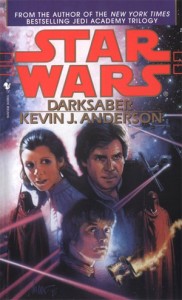
Retro Review: Darksaber Part II

For those of you that have looked at my reviews in the past, you know that I have a propensity for hyperbole.  And snark.  Lots of snark.  Kevin J. Anderson is a writer that I’ve thrown a lot of flak at in the past.  Really, he’s been one of my favorite targets, and I’ll say this, he really does seem to bear a good bit of it.  At a time not so far back, I’ve referred to him as being a kind of nemesis to me.

But to be honest, that was before I read some of the SWEU material that I was steered around the first time I was going through the Bantam/Spectra era books, which has been a long time ago.  You know that the last review I did was for Children of the Jedi in a series of posts that went on for a bit too long.  Barbara Hambly is likely not as bad a writer as she came across in that book, but it really seemed like she was pretty far outside her wheelhouse.

That book gave me a big dose of perspective for the concept of bad Star Wars.  I had held that Anderson’s books were bad Star Wars up to a point, but something else has come to my attention.  There’s a difference between bad Star Wars and not good Star Wars.  Children of the Jedi was bad.  Darksaber isn’t bad Star Wars; in fact it fits in with my usual prerequisites for being pretty good, but it has a pretty long list of bad features that throw it out of that.

I can say something good about Kevin J. Anderson up front.  I swear, just watch.  The Jedi Academy Trilogy established some very important aspects of the Expanded Universe at large.  I didn’t like it.  I didn’t like the way it was written, but for anyone who is coming into the EU from the start of the Bantam/Spectra era, it’s pretty much required reading.  For anybody who is wondering where the Academy came from, it’s important.  Let’s be honest, if you’re looking at anything except the core of the New Republic Era, anything later pretty much encourages you to read it.  The characters and concepts that get to be important later on have their sources there.

Now, you don’t want to read this; it isn’t the funny bit.  Me talking about the stuff that’s wrong–that’s what you want.  So, here’s where we stand, I’m going to break this down into just two parts, I’m not running a page by page analysis, you’re going to get the problems at large as I see them.  For me, Darksaber has two fronts of problems.  There’s the distinct storytelling issues and there’s the technical issues.

For today’s post, we’re going to focus on the latter of the two.  Hit the jump to see the story elements of this book that crawl under my skin.

Continue reading